ASTS Surveys
Public Attitudes Toward Organ Donation and the U.S. Transplantation System:
Summary of the 2025 ASTS National General Population Survey
Executive Summary
Organ transplantation saves thousands of American lives each year, yet public understanding of the transplant system remains limited. In 2022, the Health Resources & Services Administration (HRSA) announced plans to modernize the U.S. transplant system to increase transplants and donations, allowing individuals with end-state organ disease to live healthier lives and improve patient safety and outcomes. While the U.S. has the best transplant system in world, modernization was a historic step toward needed improvements in technology and innovation. To support Organ Procurement and Transplantation Network (OPTN) modernization efforts, the American Society of Transplant Surgeons (ASTS) fielded a nationally representative survey of 2,000 U.S. adults in August 2025. The findings show broad support for organ donation, deep trust in transplant professionals, and strong public appetite for better education and transparency. However, major gaps persist in public familiarity with organ allocation, awareness of system modernization, and recognition of ASTS itself.
These insights carry critical implications for advocacy. They reveal where the public is aligned with the policy goals — and where targeted communication, coalition-building, and education campaigns can substantially strengthen public support for reform.
Introduction
The U.S. transplant system is currently undergoing one of the most significant modernization efforts in its history, including reforms to the OPTN. As policymakers, patient advocates, and professional societies work to reshape the future of transplantation, understanding public perceptions is essential. Public trust is absolutely critical and directly affects donor registration, political legitimacy, and willingness to engage with the transplantation ecosystem.
The 2025 ASTS National General Population Survey provides a uniquely comprehensive portrait of Americans' attitudes, knowledge, and concerns. This analysis synthesizes the survey’s quantitative findings and translates them into actionable advocacy priorities.
Methods
ASTS partnered with The Motion Agency to conduct an online survey from August 18–23, 2025, collecting 2,000 responses balanced by age, race, gender, and geographic region to ensure representativeness. The instrument included 30 questions covering:
- Familiarity with organ donation
- Trust in medical professionals and the transplant system
- Information sources and media exposure
- Perceptions of fairness, transparency, and system performance
- Views on modernization of OPTN
- Opinions about roles of government, private sector, non-profits, and healthcare providers
- Familiarity with ASTS itself
Approximately 60% of respondents were registered organ donors, mirroring national data.
Results
Familiarity and Personal Connection
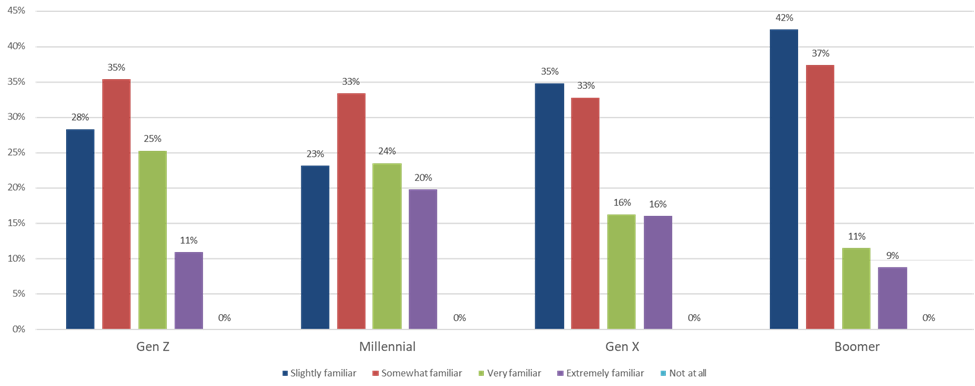
Most adults reported at least some familiarity with organ donation, but deep understanding is far less common. Younger generations who are more exposed to social media-driven health content exhibit higher personal exposure to transplantation as donors, recipients, or waitlisted individuals.
How familiar are you with organ donation and transplantation?
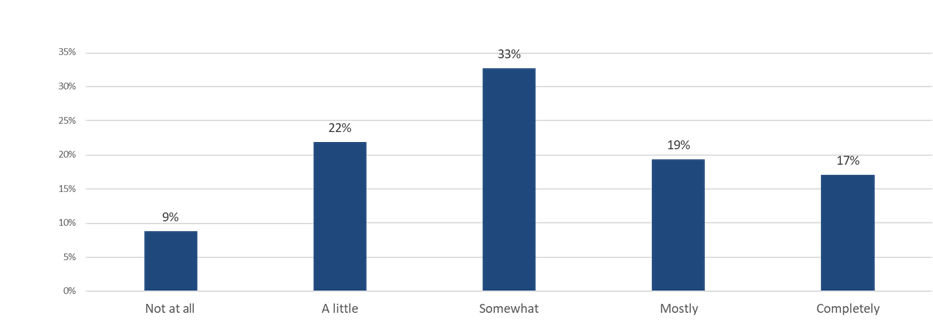
One striking finding is the mismatch between support for donation and understanding of the system. Despite positive attitudes, only about one-third report understanding how organ allocation works. This knowledge gap is a central opportunity to provide more education to the public in order to support national efforts to improve the system.
How well do you understand the way in which donated organs are distributed to people who need them in the U.S.?
Public Support for Donation
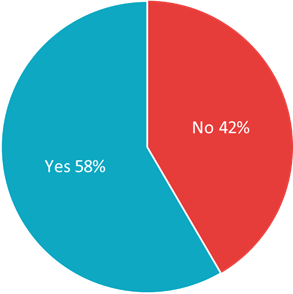
Support for organ donation is extremely high: three-quarters of respondents held positive or very positive attitudes. Fifty-eight percent are registered donors, and among non-registrants, nearly one-third express openness to registering in the future.
In general, how do you feel about organ donation and transplantation?
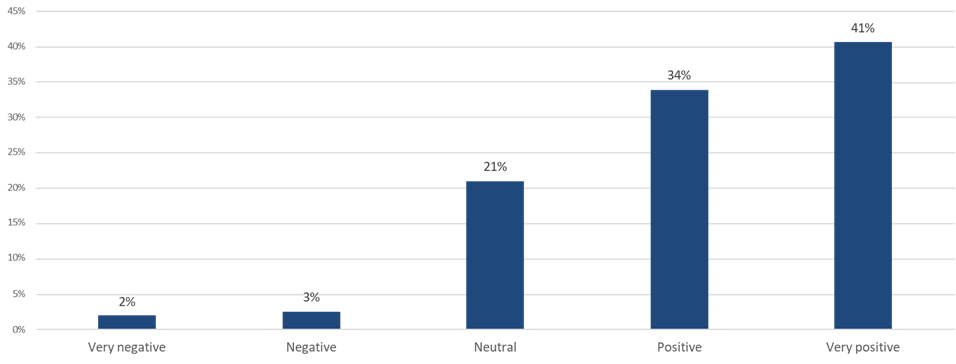
This high baseline support provides a strong foundation for expansion of donor registration campaigns. The advocacy challenge is not persuading people that organ donation is worthwhile; rather, it is helping them understand the process and trust the system.
Are you currently registered as an organ donor?
You indicated that you are not likely to register as an organ donor. In your own words, can you please share why you feel this way?
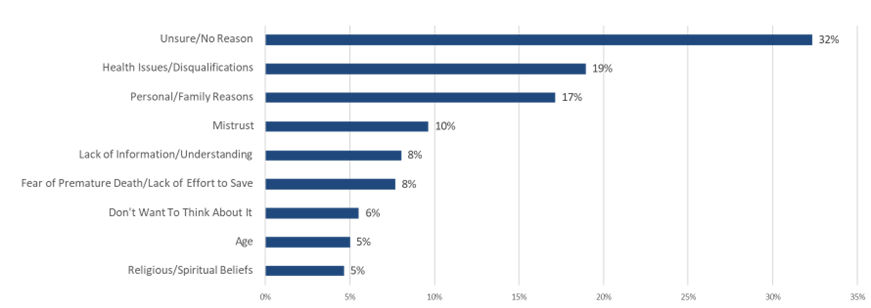
Attitudes Toward Transplantation
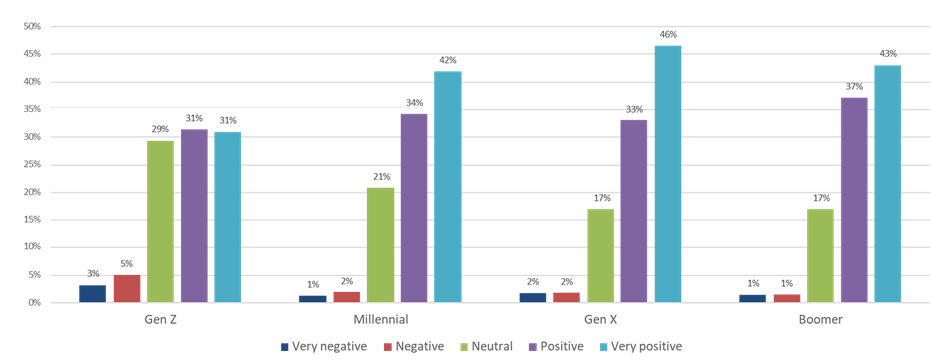
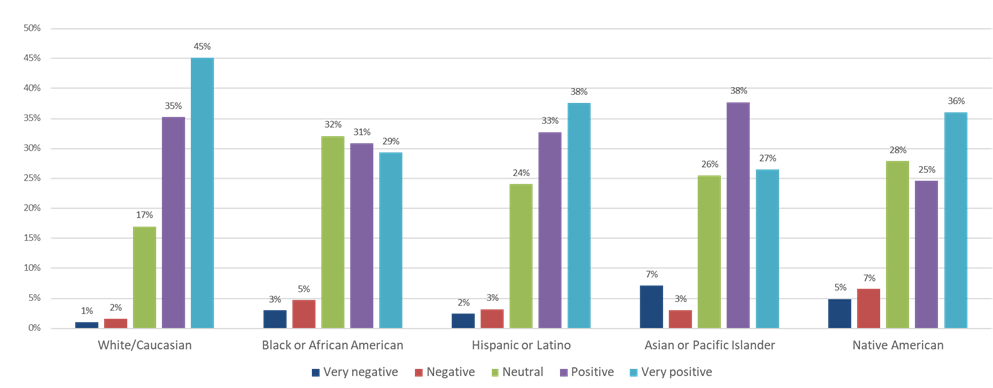
Overall sentiment is strongly positive: 75% expressed positive or very positive feelings. Gen Z was notably less positive (62%) than older cohorts, and respondents identifying as Black or Native American were less positive than White or Asian respondents. Only 36% believed they understood how organs are allocated, with Boomers reporting the lowest understanding.
In general, How do you feel about organ donation and transplantation?
Fewer than 65% of respondents identifying as Black or Native American feel positive about transplantation
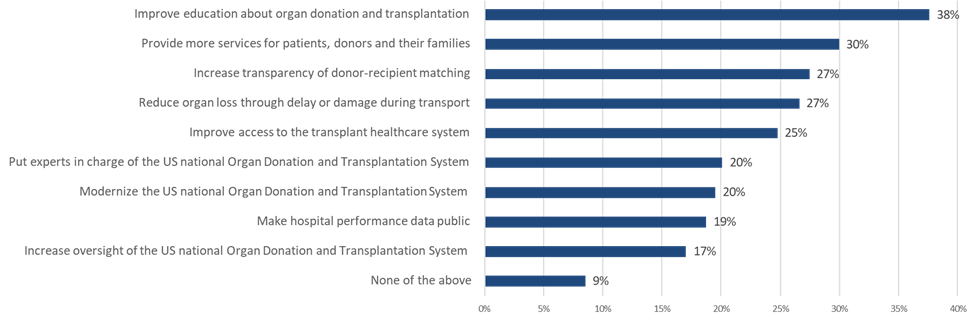
Better education was most frequently identified as the improvement that would increase positive perceptions.
Which of the following would make you think more positively about organ donation and transplantation? (select up to 3 options)
Information Sources and Trust
The public primarily seeks information via online search and doctors, while transplant-related organizations (OPTN, UNOS, SRTR) are infrequently consulted. Trust levels, however, are highest for transplant medical centers and transplant organizations. Social media is widely used but minimally trusted. Younger generations rely more on social media, particularly YouTube, TikTok, and Instagram. Across races, YouTube and Facebook dominate as social media sources.
Where do you go to get information about organ donation and transplantation? (select all that apply)
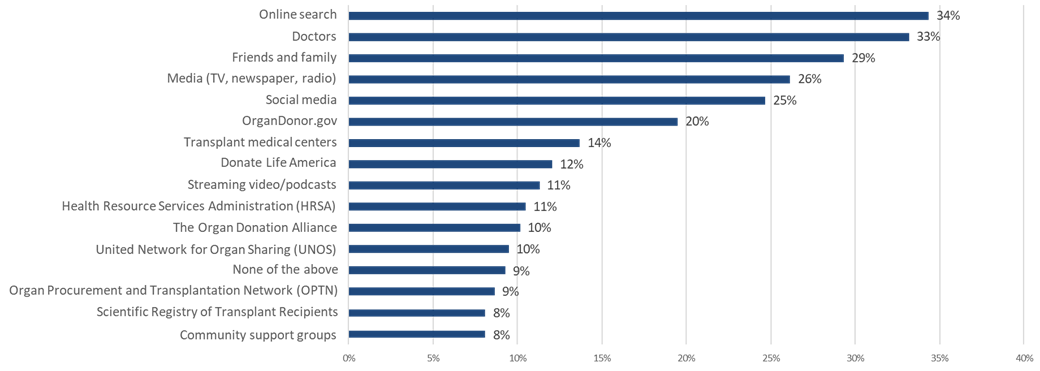
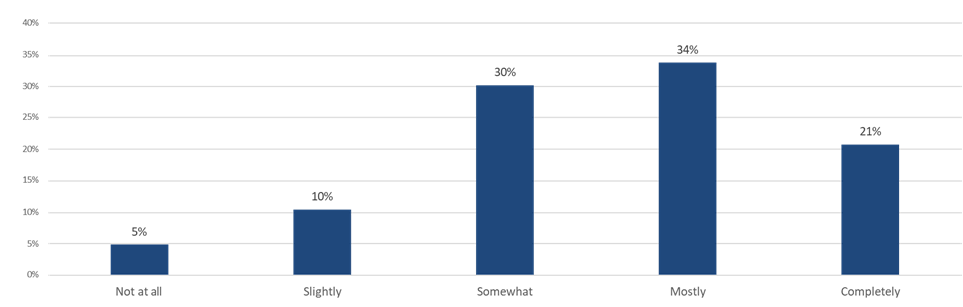
More specifically, trust in transplant professionals (surgeons, doctors, nurses) is exceptionally high — 63% trust them “mostly” or “completely.” Trust in the overall system is lower (55%) but still strong. Importantly, Boomers report the highest trust, while Gen Z reports the lowest, indicating emerging generational trust gaps that could widen over time.
The public consistently trusts people (clinicians) more than processes (systems). Advocacy strategies must therefore center clinicians as messengers for both system reform and helping translate system complexity into trusted human narratives.
How much do you trust the U.S. national organ donation and transplantation system to manage the process of recovering, matching, and transplanting organs from donors to patients in need?
This survey represents this decades first and largest of its kind since a 2019 study by the Health & Human Services Administration (HRSA) through their National Survey of Organ Donation Attitudes and Practices, 2019. These findings reflect a key advocacy opportunity for ASTS and the broader transplant community to dramatically strengthen public trust by becoming more visible where information is actually sought online.
Two-thirds or more rated most aspects of the system as “good” or “great,” especially surgical safety, respectful treatment of donors and families, and donor registration systems. However, several systemic concerns emerged:
The top perceived problems requiring improvement include:
- Getting patients in need added to waitlists
- Preventing organ loss due to transport issues
- Providing adequate information to families
These perceptions align directly with key policy priorities of modernization of allocation systems, improvement to logistics infrastructure, enhanced communication standards, and increased transparency.
Native American respondents generally viewed system performance more critically than other groups.
Media Exposure and Innovation Awareness
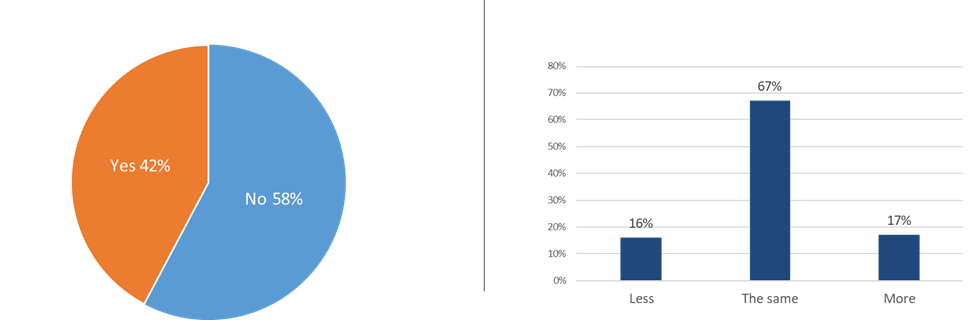
A majority (58%) had not heard recent news about transplantation. Generationally, younger respondents reported more exposure. Awareness of OPTN modernization was low overall, with only 40% expressing even slight familiarity; Gen Z and Millennials were most aware. Awareness of innovations, such as machine perfusion, AI-based matching, or xenotransplantation, was modest, with each known to about one-third or fewer of respondents.
In the past year, have you seen or heard anything about organ donation and transplantation mentioned in the news?
Compared to previous years, have you heard more, less, or the same amount of news about organ donation and transplantation?
Views on Roles of System Entities
Respondents assigned distinct roles within the transplantation ecosystem:
- Healthcare providers were overwhelmingly preferred to "take the lead" (41%).
- Non-profit organizations were viewed as best suited for advisory roles (34%).
- The government was expected to "give some input" (35%), with 24% saying it should have no role.
- The private sector was expected primarily to "give some input" (43%).
Generational and racial differences were notable, with Millennials more likely to support a government leadership role and AAPI respondents least likely to assign “no role” to government entities.
Opportunities for the Transplant Community to Be Heard
The survey highlights several actionable insights for ASTS and key stakeholders within the community:
1. Invest in Education to Close the Understanding Gap: The public wants more transparency, clearer explanations of allocation, and more education. Advocacy campaigns must emphasize simple, human-centered storytelling supported by data clarity.
2. Leverage High Trust in Clinicians: Clinicians should be the public face of system reform. When surgeons speak, the public listens. Legislative advocacy should similarly elevate clinician voices.
3. Strengthen ASTS Public Visibility: Low awareness paired with high trust among those familiar with ASTS indicates a high-return communication opportunity. ASTS should increase its public presence across:
- Search results
- Social media
- Patient-facing educational materials
- Modernization briefings and public testimony
4. Address Generational Trust Declines: Gen Z is less trusting, more exposed to health misinformation, and more reliant on social media. Advocacy efforts targeting young Americans must be digital-first, visually compelling, and myth-busting.
5. Push for Transparency and Modernization: Public appetite for modernization, oversight, and transparency aligns squarely with ASTS policy goals. This alignment should be explicitly communicated in advocacy messaging.
6. Emphasize Equity Issues: Racial differences in trust, exposure to transplantation, and perceptions of system performance indicate a need for culturally tailored educational materials and policy advocacy that foregrounds equity.
Conclusion
The 2025 ASTS National General Population Survey reveals a U.S. public that strongly supports organ donation but remains uncertain about the system that governs it. Americans trust transplant professionals, want modernization, and expect healthcare providers — not government or private companies — to lead system reform. These insights provide a powerful foundation for targeted advocacy campaigns to expand donation, strengthen public trust, and accelerate adoption of system reforms that save lives.
Suggested Citation:
American Society of Transplant Surgeons. (2025). Public attitudes toward organ donation and the U.S. transplantation system: Summary of the 2025 ASTS national general population survey. Retrieved [insert date] from https://www.asts.org/connect/general-population-survey-results.