News
Heritage Month: Hear from Tsuyoshi Todo, MD
Jun 18, 2026, 14:30
by
ASTS
Can you tell us a bit about your transplant story — what led you to pursue transplant, and what was that journey like for you?
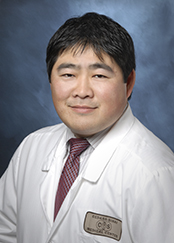
I have a unique background in my transplant story in that I am a second-generation transplant surgeon. My father, Satoru Todo, relocated our family to the US in 1984 and became a liver transplant surgeon under Dr. Starzl at the University of Pittsburgh. At the time, transplantation did not exist in our native Japan. He was determined to learn transplantation and bring back what he learned to help the patients in Japan. The original plan was to stay in the US for only one year. My parents ended up staying in Pittsburgh for 13 years.... and I am still here....
Growing up in the 90’s, I observed the demanding lifestyle transplant surgeons had to endure during the adolescence of liver transplantation. When I got my driver's license, I often drove my dad to work in the middle of night (so I can have the car to drive myself to school and to soccer practice) not really realizing the significance of the work being done at Pitt at the time. As I grew older, I began to understand the and appreciate what the pioneering transplant surgeon had achieved and was also inspired by the innovations in transplantation: the advent of FK506 (tacrolimus), the development of intestinal transplantation, and the first Baboon to Human liver transplants (at least from the viewpoint of high school kid…).
My own journey into the transplant world was rather organic. During my undergraduate years at the University of Chicago, I had a chance encounter with Dr. Steve Woodle. He took me into his transplant immunology lab as a volunteer lab tech where I worked under Dr. Sanjay Kulkarni. Drs. George Loss and Atsushi Yoshida, both transplant fellows at the time, took me on my first Organ Recoveries when I was still living in my frat house. When I matriculated into medical school at Georgetown and matched into residency, many of my mentors just happened to be transplant surgeons. My general surgery residency mentor was Dr. Andrew Klein, the Director of the Comprehensive Transplant Center at Cedars-Sinai. He got me into his lab during my research fellowship where I learned about alloantibody desensitization under Dr. Stan Jordan. So, when it came time for choosing a fellowship, transplant seemed like an obvious pick.
I was fortunate to match at Stanford for my transplant fellowship and trained under Dr. Carlos Esquivel who was also in Pittsburgh during my childhood. I originally met Carlos when I was 7 years old when he was working with my old man at Pitt. This was the closest thing I could experience to learn about transplantation from my dad. So, this was a full circle moment for me in my transplant origins story.
I am very thankful for the many transplant mentors I encountered during my development.
How did your Asian-American and Pacific Islander heritage influence your experience?
Transplantation from deceased donors was expanding access for patients needing transplant in the US during the 80’s and 90’s. Yet, in Asian countries such as Japan and Korea, there were limitations and hurdles due to lack infrastructure and political/legal/social issues with deceased donation. The late recognition of brain death as a death, and other cultural issues in Asian countries stunted the development and expansion of deceased donor transplantation. In my callow (high school) mind, I was thinking. “why don’t they just change the laws so that we can help more people?” I was definitely naive to think that changing the laws about transplantation would greatly expand access to transplantation. When I reflect back on the issues of transplantation in Asian countries from the 2000’s to present day, I now realize that changing the culture of a nation in how they view death/brain death and to build the appropriate infrastructure for deceased donor transplantation takes time. The US had a 40-year head start compared to Asian countries.
Asian countries had to rely on the courage and beneficence of live donors to help develop transplantation. Now, they are the leaders in live donor liver transplantation. As we are faced with limitations of deceased donation and lower donor registration, we are looking more to live donors to fill the gap created by the high demand and lack of organs for our patients in the US. Their vast experiences and expertise in live donor liver and kidney donation have become a key factor in expanding transplantation in the US.
When I became a freshman transplant attending, I was fortunate to be assigned to the Leg/Reg Committee of the ASTS. While on the committee, we helped push for pro-transplant legislation and remove barriers to live donation by advocating the Living Donor Protection Act to our elected leaders in Congress. I have since been a participant in our annual Advocacy Day to inform policy makers of the importance of removing disincentives to Live Organ Donation.
By bringing transplantation to the forefront and taking care of patients through live donation, I'm hopeful that one day, we can overcome the challenges of organ shortage in the US and “catch up” to some of the Asian countries.
Are there cultural relationships/impressions within your community about organ donation or transplantation that you’d like others to understand better?
Asian Americans have the lowest rate of deceased organ donation per million among the different ethnicities in the United States. Yet, a paradox exists where many Asian countries, transplantation exists primarily through living organ donation. The reasons for this disconnect are multifactorial, spanning religious beliefs, family dynamics, and deep-seated cultural frameworks.
In practice, one of the most prominent barriers to living donation is the reluctance of older patients to accept an organ from their children. This stems from a foundational consensus within immigrant communities that parents must unconditionally provide for their offspring—a framework of downward uni-directional benevolence. Many of these families uprooted their lives and moved to America in search of a better life for future generations to secure the “American Dream” for their children. To these parents, sacrificing their own health is preferable to jeopardizing the physical or financial well-being of their children. Consequently, they view themselves strictly as givers and resist reversing this role to become takers from their offspring, making this reluctance a universal immigrant narrative as much as an Asian cultural perspective.
However, this dynamic collides with traditional views on filial piety, which mandates that adult children hold a reciprocal, societal obligation to care for their aging parents. This contradicts the downward benevolence framework and can be further complicated by a strong cultural emphasis on body intactness in some East Asian cultures (vs some South Asian cultures that see the body as just a vessel for the soul). Some traditional views dictate that the body is a sacred gift from one's parents, and there is an unspoken rule that it must be kept whole. Submitting a child to surgery violates the parental duty to protect the child's body.
So when a parent falls ill, an adult child’s desire to fulfill this duty of filial piety through living donation can become very complicated. To overcome these deeply ingrained barriers, medical professionals must adapt how they discuss transplantation with Asian families. Instead of focusing solely on individual autonomy, conversations should reframe transplantation as a global benefit to the entire family unit. Clinicians must remain sensitive to the heterogeneous beliefs within various Asian cultures while actively stressing the collective advantages of transplantation. These advantages extend far beyond the patient's individual survival; they encompass the relief of caregiver burdens, the restoration of family-wide emotional peace, and the long-term financial stability of the household. Reframing organ donation not as a violation of tradition, but as an act of ultimate familial care, is essential to dismantling these cultural barriers.