News
National Hispanic Heritage Month: Hear from Kiara Tulla, MD
What drew you to transplant surgery specifically — was there a moment, mentor, or case that pulled you in?
Few doctors get to meet their patients on a day of pure joy or relief — but transplant surgery can turn what began as
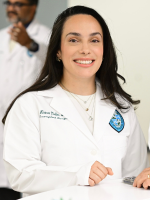
tragedy into exactly that. There's something transformative to me about restoring organ function, about giving someone a new way to live, to hope, to simply be. Beyond that, it's a field that never stops testing me — technically demanding, constantly evolving, opening its benefits to more patients each year. That combination — the meaning and the challenge — is what pulled me in and hasn't let go.
Was there a patient whose story stays with you and shaped how you practice?
My pediatric patients hold a particular place in my heart, though I find joy in caring for every patient I meet. One moment stands out above the rest: transplanting a little girl who shared my own name — a Hispanic girl given the chance to thrive. It remains one of the sweetest moments of my career, a reminder of exactly why this work matters to me.
How has being Puerto Rican shaped the way you show up with patients — language, trust-building, how you explain a diagnosis or a transplant decision?
Language and culture aren't details to me — they're the foundation of trust. When I can speak to a patient in their native tongue, it offers a comfort that's hard to replicate any other way. I carry deep gratitude for my parents, who made sure I grew up immersed in the language and culture of my ancestors, knowing it would one day help me reconnect — not just with family near and far, but with patients who see themselves in me.
Do you code-switch or draw on your own family's health experiences when talking with Hispanic patients and families?
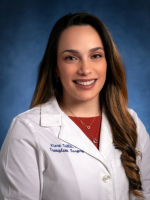
I try to meet people where they are, working to build a care plan that's attainable within the boundaries of their culture rather than despite it. And I'll say it plainly: my personality in Spanish is more vibrant, more alive — and when I'm given the space, I share that fuller version of myself with my patients.
What have you heard from Hispanic patients or families about how they view organ donation or transplantation?
Wariness is real, and it's earned. Many of my patients and their families carry a fear of a system they haven't had reason to trust completely — and when the idea of donation is new or unfamiliar, it can be culturally difficult to accept. That's why I lean on the families who have said yes, who've lived through donation and transplantation and come out the other side. Their stories become the bridge for me — a way to build a warmer, safer space where the next family can ask questions and be heard before they have to decide.
Are there specific misconceptions you find yourself correcting often?
Correcting misconceptions — for any patient, of any background — I see as a duty of my profession, not an extra. But I've found that hope and cultural awareness aren't in competition with each other; they work in concert. When donation can be framed alongside a family's religious and cultural values, rather than apart from them, more donors say yes, more patients feel safe, and more families feel seen in moments of real desperation and need.
What's one thing you wish non-Hispanic colleagues understood before walking into a room with a Hispanic patient or family?
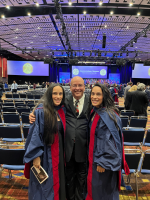
Educating not just the patient but their whole support system is essential to me. A village helps anyone — but for Hispanic families, that village often is the thriving. I want my colleagues to walk into the room ready to meet the matriarch: she may well be your strongest ally before and after transplant, the person who holds the family together through the hardest parts of the journey.
What does it mean to you, personally, to put your name and face on this during Hispanic Heritage Month?
Latina surgeons are an energetic, driven group — relentlessly working to make life better for our peers and our patients. Being counted among them is a privilege to me. My hope is simple: that this group keeps growing, keeps thriving, and that more young women see a place for themselves in it.